
Lecture by Martin Hosken: The Self: Critical Reflection
The existential and psychoanalytical questioning of the self resonates with my fine art experience and exploration of the human condition, and how creativity provides a cathartic transcendental release from the physical and psychological limitations of the internalised human experience. As the boundaries between graphic design and art are continuing to blur as analysed in the previous weeks, perhaps graphic design can be used to interrogate and dismantle culturally inherited ideas and encourage positive social change in alignment with progressive 21st century values.
The Century of the Self, Adam Curtis: Critical Reflection
In the documentary, The Century of the Self Adam Curtis explored how Edward Bernays utilised Freidan psychoanalysis to manipulate the masses and reorder society and economics towards a self-consuming desire driven culture. Berny’s created the professional field ‘public relations inspired by ‘propaganda’ a term with pejorative associations after its use by the Germans during the war. Part one: “Happiness Machines” explores emergence of Freidan ideas – such as the instinctual drives, libidinal forces, analysis of dreams and free association and the unconscious. The unconscious contains remnants of our animal past, powerful sexual and aggressive forces which are repressed because they are dangerous.
Bernays application of psychological theory to mass corporations, transforming America from a ‘needs to a desire culture’ where ‘man’s desires must overshadow his needs’ (Lehman Brothers, Paul Mazur, 1928) highlighted to me the self-destructive nature of mass consumerism and materialism considering its impacts on contemporary culture today, including image and status consciousness and its effects on mental health, inequality and uneven distribution of wealth, land sea and air pollution from the mass manufacturing of short lived goods. In light of a generation more concerned with design for social good, the documentary forces us to confront the ethical question of our irrational relationship with products as well as the rights and welfare of the individual consumer.
Bernays’ techniques of mass consumer persuasion which are still practiced today, such as promoting cars as symbols of male sexuality, are fascinating from a psychoanalytical perspective, however seem quite insidious and exploitative when considering the internal complexities of the individual. For example the campaign to persuade women to smoke aimed to dispel a taboo evoked by men against women smoking in public. Cigarettes were analysed under Freudian theory as phallic symbols of male power that should not be accessible to women. In an effort to access the female market, they became connected to the visual symbolism of national American liberty through their affiliation with the Suffragettes as ‘torches of freedom’. This exemplified how it is possible to persuade people to behave irrationally by link products/ inanimate objects to unconscious emotions and primitive aspirations for power and identity. Despite empowering a positive movement for equality, particularly in light of the now known health implications of smoking, this campaign further provokes the question of boundaries and ethical cost of advertising. Another technique introduced was to encourage ideas that products were healthy by linking them to privately funded biased studies which were presented as independent and objective. This is a technique also still used today and is actively called out by environmental, public health and animal rights groups, particularly in documentaries ‘Cowspiracy’ and ‘Forks over Knives’.
Further Research
Freud’s ‘Civilisation and its Discontents’: Group psychology and aggressive forces.
Relationship between the unconscious, group psychology and democracy.
Freud argued that civilisation was not an expression of human progression, rather it was constructed to control dangerous animal forces inside human beings. His intrinsic argument was that the individual freedom at the heart of democracy was impossible as it was too dangerous and that human beings had to always be controlled and thus always discontent.
Human civilisation has always been controlled in order to control the masses, for example, Christological art can be analysed and medieval and renaissance propaganda to control the actions of individuals through the threat of eternal damnation and reward of eternal life. However the creation of ideologies creates its own consequences of mass irrationality, evident in religious wars and in a contemporary context, exploitation of people in manufacturing industries and the irrational continuation of unsustainable corporate practices in light of the climate crisis. Even though mass manipulation should not be aspirational, the nature of the human condition is based on many dualities and human endeavour is self destructive, therefore whether human society is organised into ideologically driven cultures or not, I feel that ‘discontent’ is a universally human and inevitable trait.
After analysing how Bernays’ manufactured a utopian ideological marriage between democracy and capitalism (specifically through the ‘Democracity’ project and ‘Engineering of Consent’) which persists today, it’s easy to feel misanthropic and overwhelmed by our existential reality, which is organised by abstract systems born from exploitation of human insecurities. As human society evolves and our relationship with psychology develops from one of embarrassment and threat to one of empowerment and critical self-reflection, I feel that graphic design can be used, in relationship with socially conscious organisations, to revaluate the functionality and health of the political, economic and sociological systems which shape contemporary culture.
Anthony Giddens: Modernity and self-identity; self and society in the modern age (The Trajectory of the Self): Critical Reflection
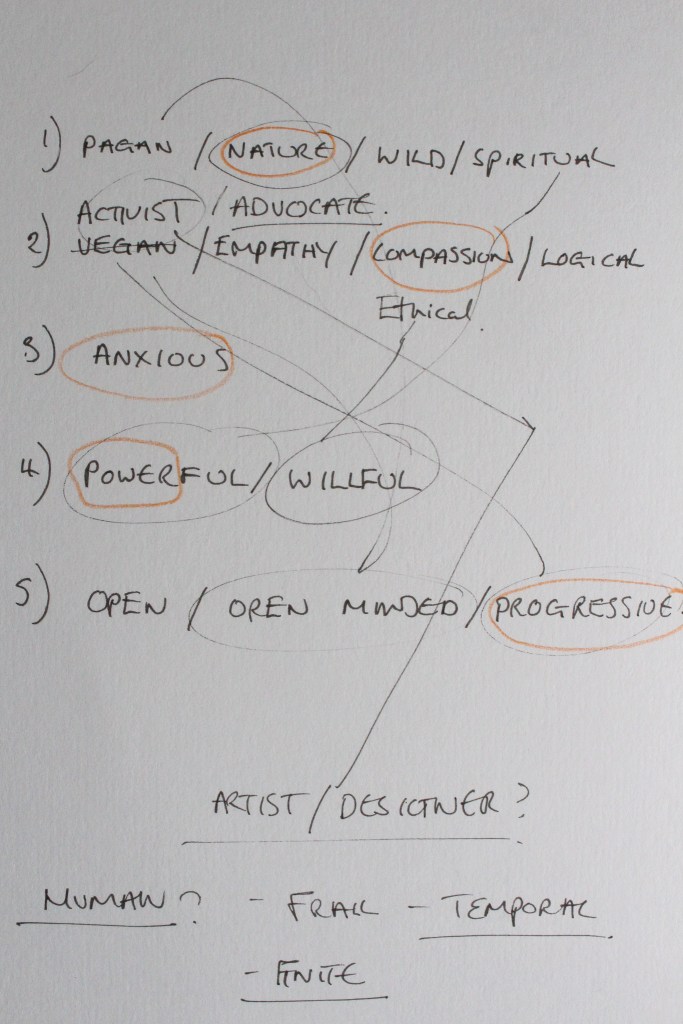
I found Giddens’ interrogation into how modernity influences the self informative from a philosophical and psychological perspective, as historical and evolutionary factors influence our existential experience, understanding of ‘being’ and self identification, which consequently influence culture and design. Ideas such as the self as a ‘reflexive project’ influenced by rights of passage and our relationship with time inspired me to consider how an awareness of mortality can define our awareness of self, but also our behaviour when forced to acknowledge our human limitations. This reminded me of Freudian ideas of Eros and Thanatos, the life and death drives outlined in ‘The Pleasure Principle’ which explores how creative libidinal drives such as sex, hunger or pain avoidance are an active defiance of death. The self defining nature of mortal awareness was also compared to ‘manure’ by Philosopher Alan Watt’s, who stated that it is highly ‘generative of creative life’. For this reason I chose a selection of words such as finite, mortal and human in the workshop challenge, as although universally broad, I feel strongly that my attitude towards nature and the ephemerality of all life informs my work, ethics and values in a meaningful way.
Further Research
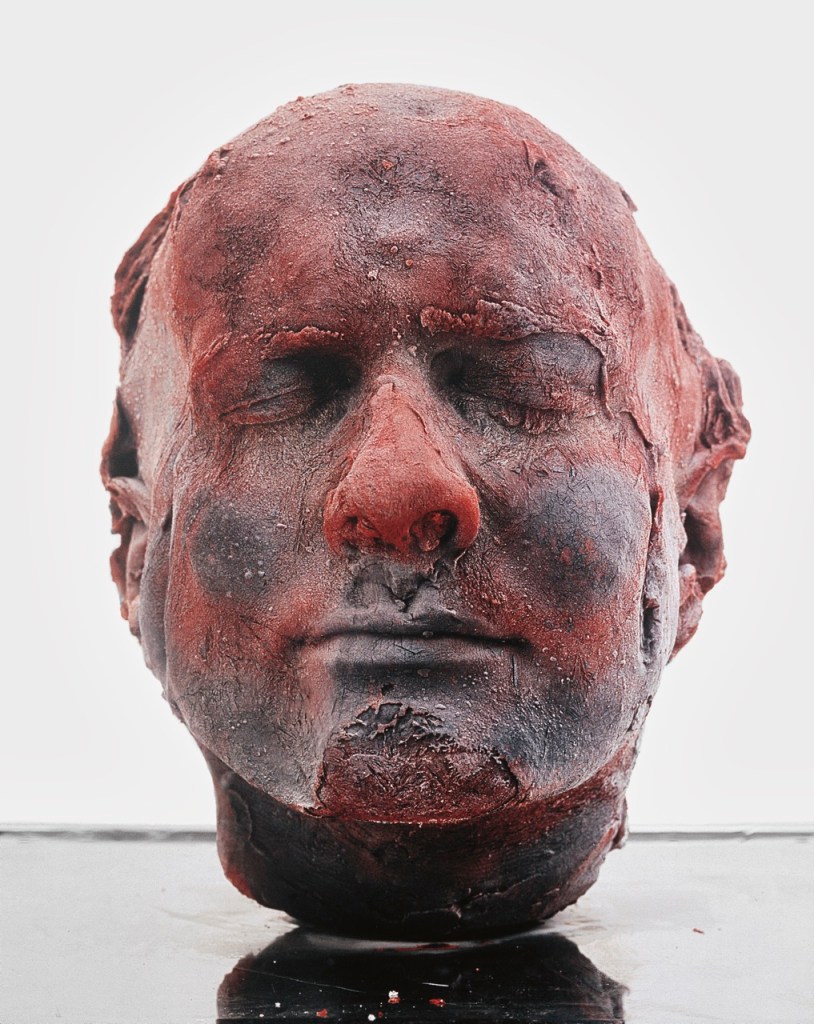
http://marcquinn.com/artworks/single/self-1991
With regard to the notion of ‘self’, Mark Quinn’s ephemeral ‘self-portrait’ cast in frozen blood inspired me to explore the materiality of transience in relationship with human identity. Having worked with ice sculpture during my study of fine art (see week 1 – workshop challenge), I wanted to take the piece further, pushing it into a new context, from sculpture and photography, into moving image which to emphasise transitory process.
Workshop Challenge:
Idea Generation:
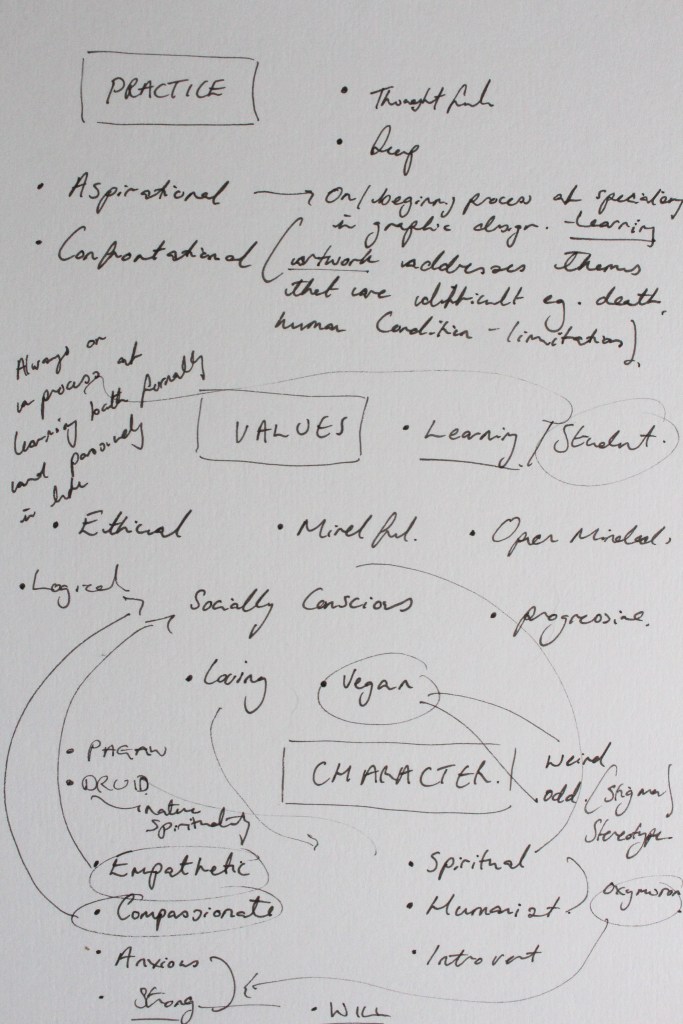
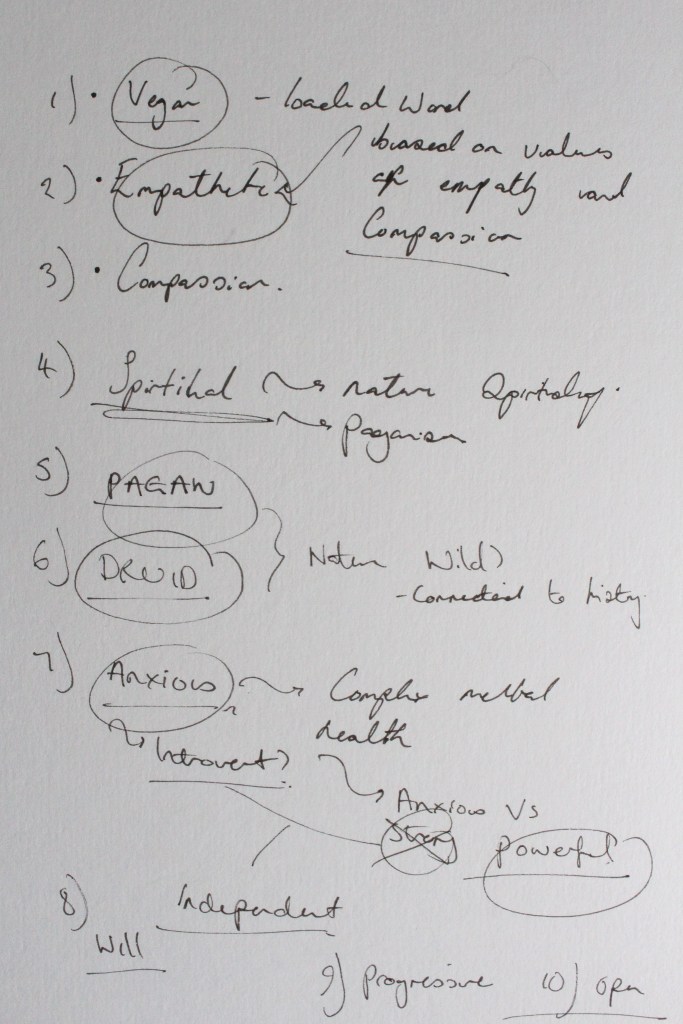


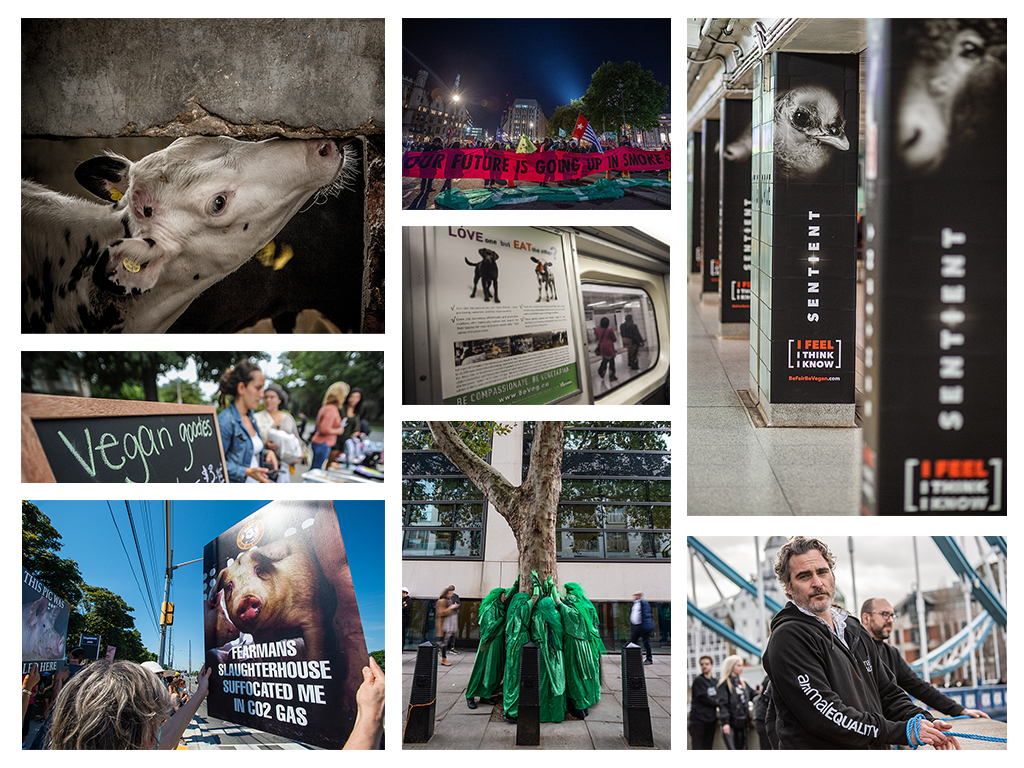
Activist
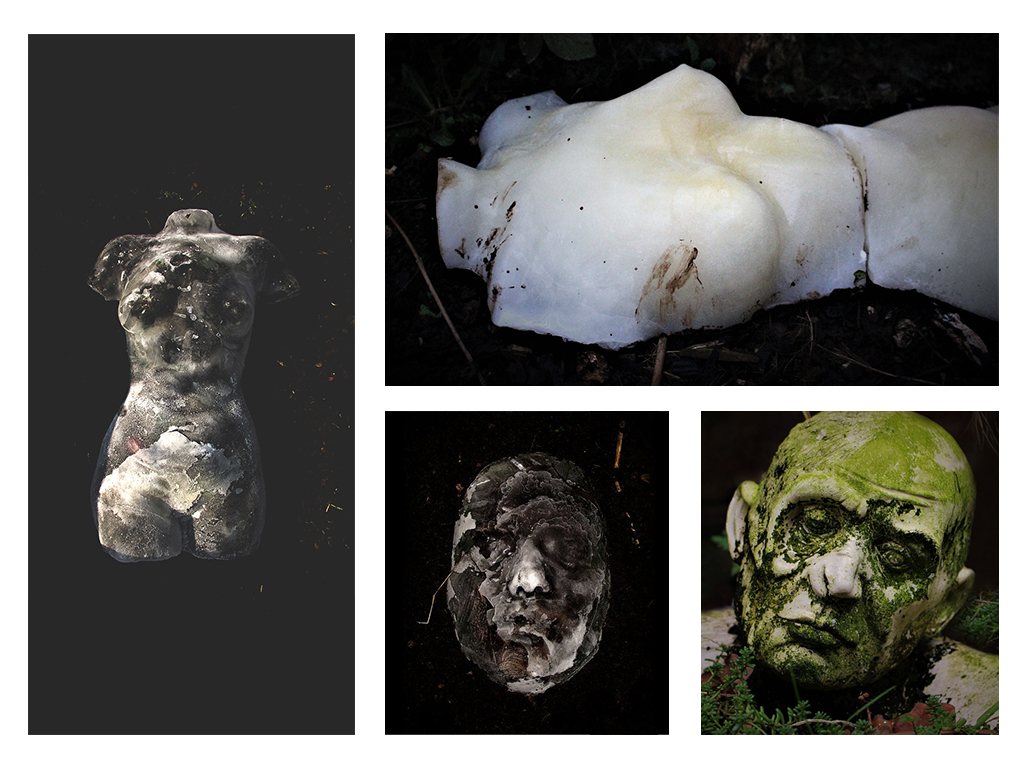
Artist
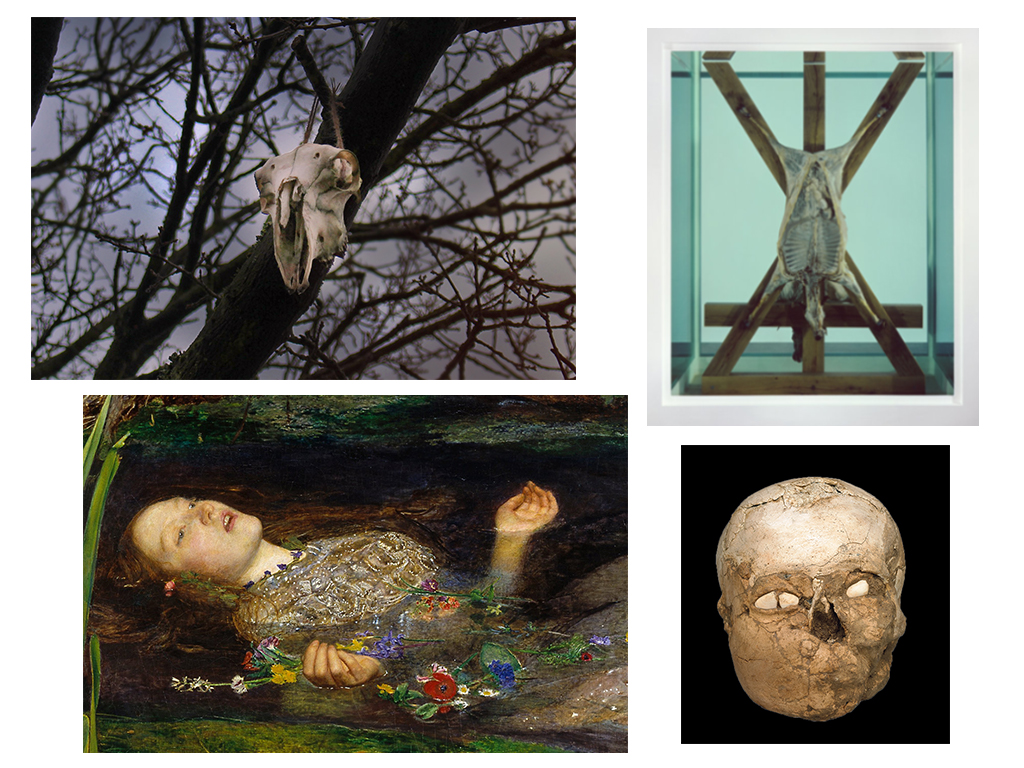
Nature

Spiritual

Finite
Process and Exploration

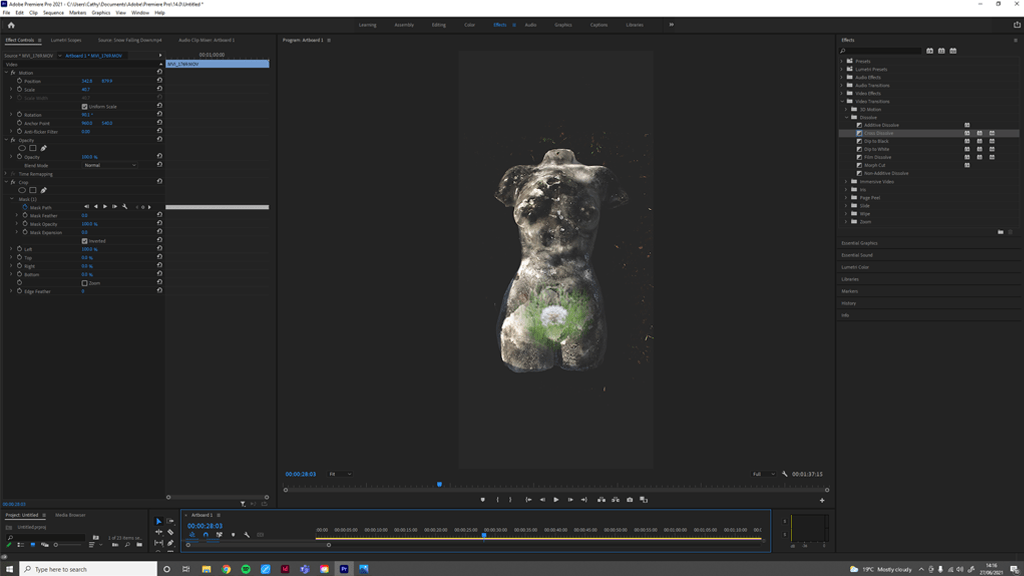
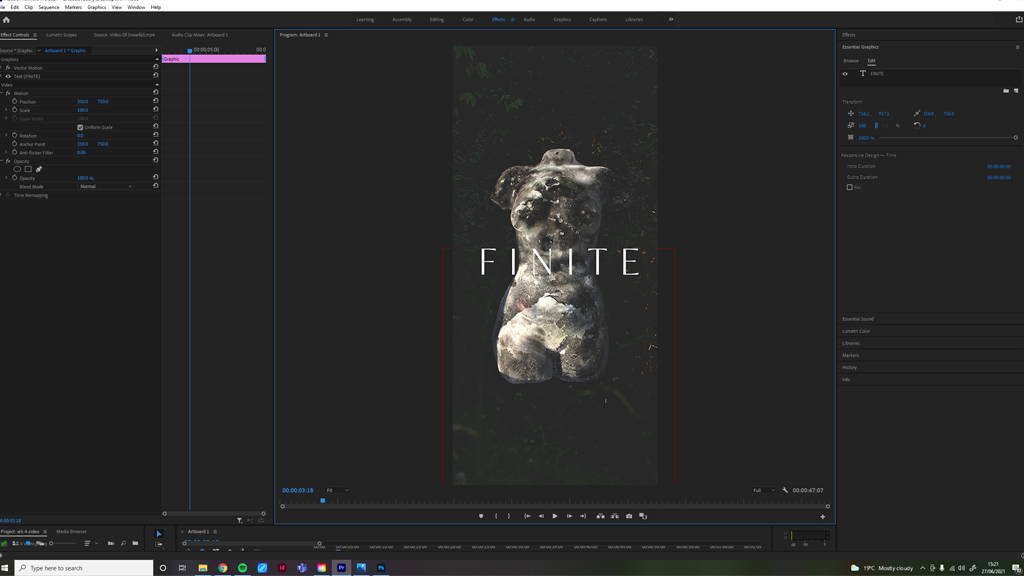

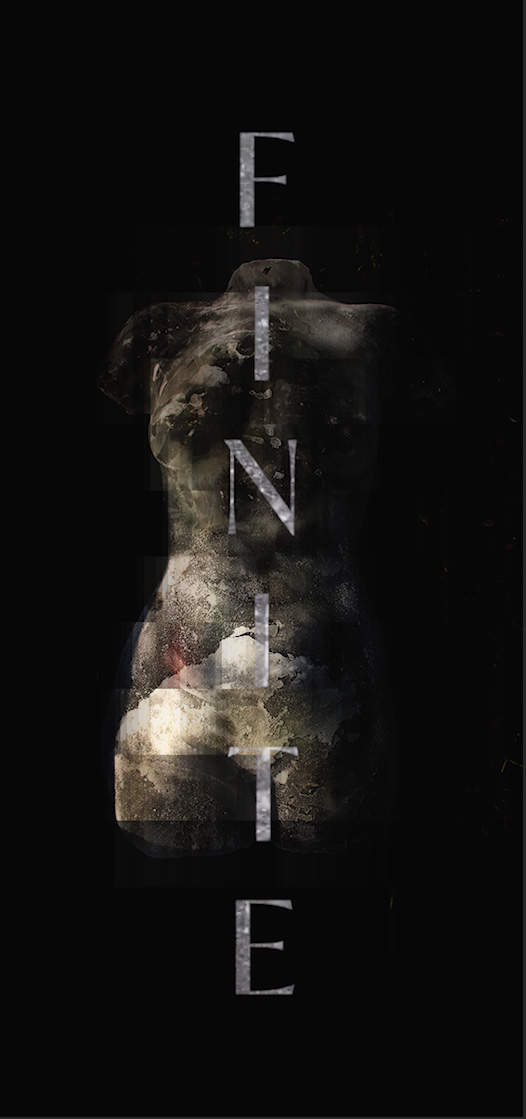
I experimented with typography, composition and sequence and settled on fading transitions of different seasonal landscapes with closing type ”finite’ complimenting the elongated portrait canvas with evocative snowy texture and movement through the use of track matte keying on Adobe Premier Pro to create a filmic finish.
Outcome 1: Critical Reflection
During the word selection stage of this challenge I began to notice patterns between certain word combinations which at first felt contradictory such as ‘anxious’ and ‘strong/ resilient’ and ‘spiritual’ and ‘humanist’. As discussed in reflections on Freudian psychoanalysis, this highlights the human conditions capacity for duality and how identity is constantly constructed and redefined by transformational experiences.
Inspired by themes of time and death in Giddens’ The Trajectory of Self, and the Freudian Eros and Thanatos, life and death drives, I wanted to develop my week 1 workshop challenge with videography that communicated interconnecting themes from my word selections: nature, ethics, spiritual/ druid/ finite. I also used this figurative female image to symbolically represent the relationship between the awareness of mortality and creativity.
Feedback: (Junior Graphic Design Colleague)
The transitions are very reflective of themes of nature and transience but the moving image overlays could maybe be a little bolder as they’re very subdued. Experiment with abstracted images and transitions which contribute to the ephemeral theme.
Further Research:
Final Outcome
Evaluation
Following peer feedback and further research into videography techniques, I experimented further with animated video effects such as ‘mosaic’ which contribute to underlying themes of fragmentation and transience by abstracting the original form. I overlaid this onto a secondary image of the torso in order to not lose the image completely, however in hindsight I could develop this piece by embracing the absence of figurative form and being more bold with layered textures. The technical aspect of this challenge has made me extremely passionate about videography and interested in how video editing can be utilised express and explore a plethora of human emotions and artistic ideas. On reflection of the inspiration for this final outcome (music videos Jonsi, Mold), I would also like to explore the how video is used across the cultural sector in music, advertising etc and also how sound can be used to create a meaningful multisensory experience of moving image.

 CATHY DAVIES